
CARDINAL HEALTH NEXT-GEN eCOMMERCE PLATFORM
Laying the foundation for access management on a next-gen eCommerce platform
ROLE
Designer
KEY RESPONSIBILITIES
Collaboration with Multi-discipline Team
Workshop Facilitation
UI & Interaction Design
User flow Development, Wireframing, & Prototyping
TOOLS
Adobe XD
Lucid Board
Okta API
Zeplin
Jira

THE CHALLENGE
Everyone has high expectations for technology in their everyday lives. For pharmacists, the tools they use for their jobs are no different.
To stay competitive, Cardinal Health is rethinking their antiquated pharma eCommerce experience from beginning to end.
THE PROCESS
Collaborating with a full team of product owners, business analysts, UX researchers, and technical partners, I am part of an agile squad focused on login, account management, and user management. We work in lockstep with four other squads dedicated to the eCommerce experience's next steps.
Due to the highly regulated nature of pharmaceutical retail, a user's role in a pharmacy can dictate very different functions on our platform. Because of this, unpacking the needs of each user and how we manage access is foundational to the entire experience.

How might we empower pharmacy employees of different roles to take charge of their everyday ordering activities?
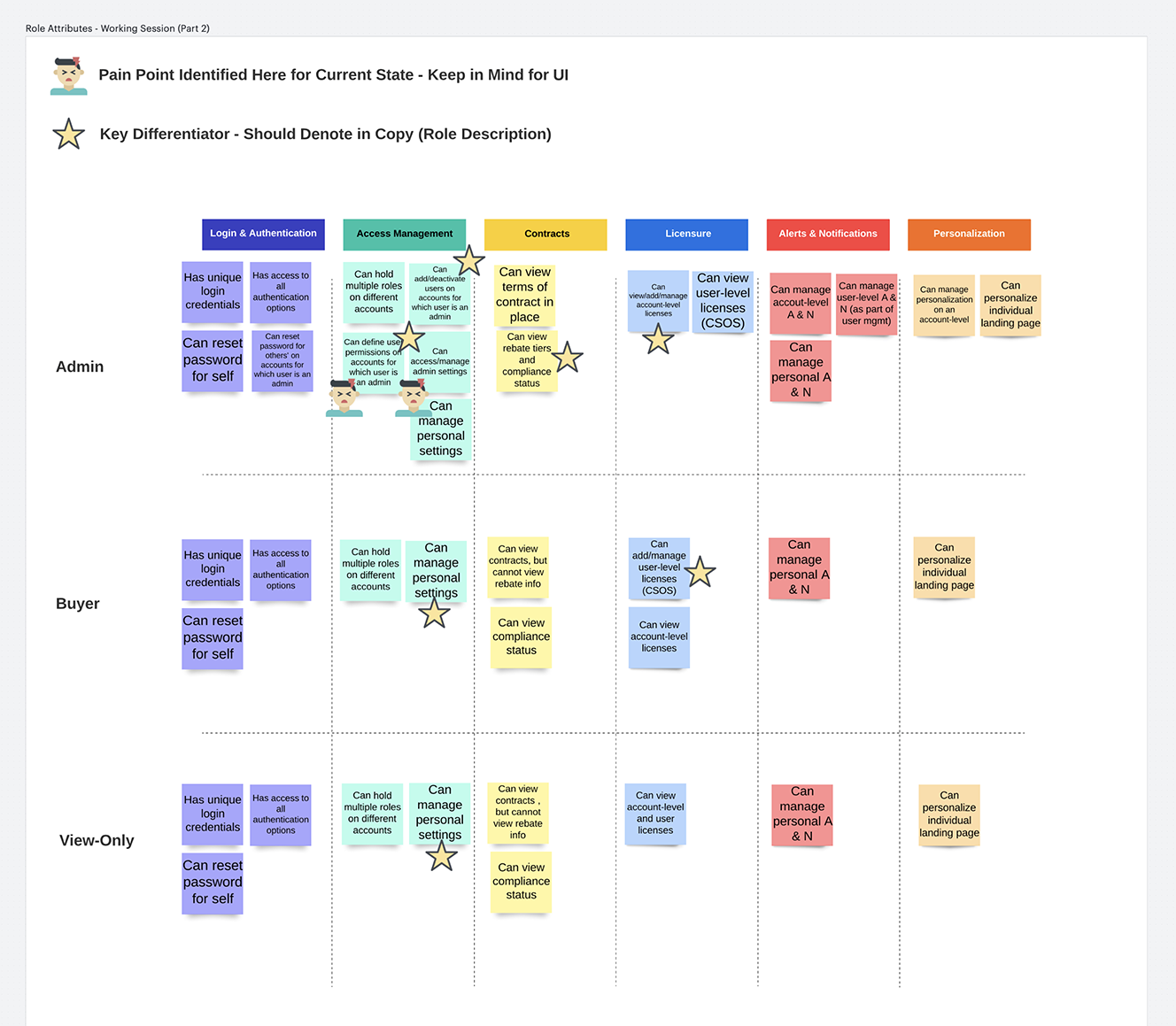
DISCOVERY
Currently, our users rely on sales reps to manage their roles and access to the eComm platform. These service calls are major pain points for both our users and sales reps.
To better understand the current experience, a Sr. UX Designer and I worked with a researcher and business analyst to look through call center data, listen to recorded calls, and interview subject matter experts.
In addition, we worked with database engineers to understand the architecture of the current roles and permissions, finding the crossover and gaps between user expectations and the existing account structure.
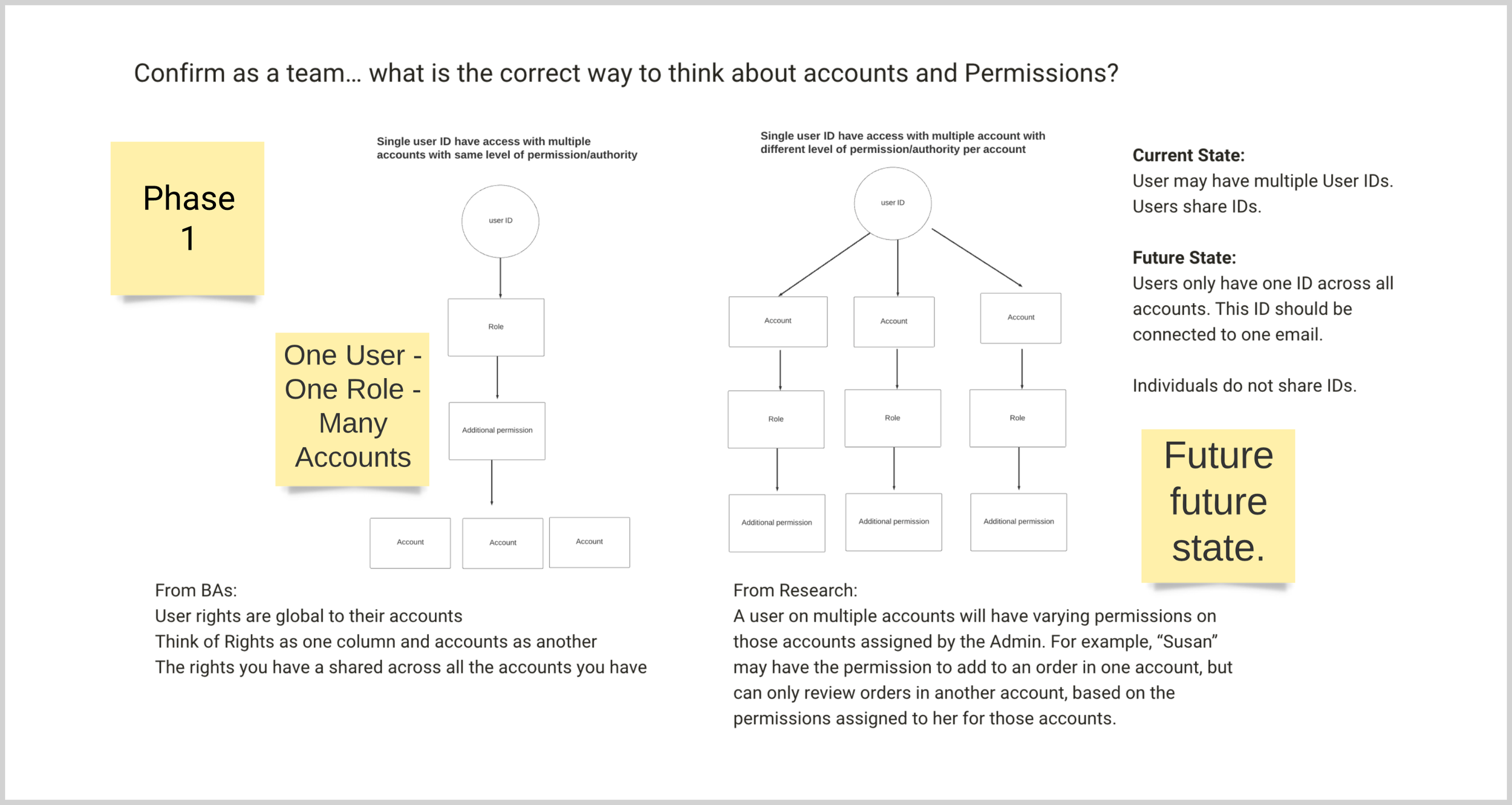
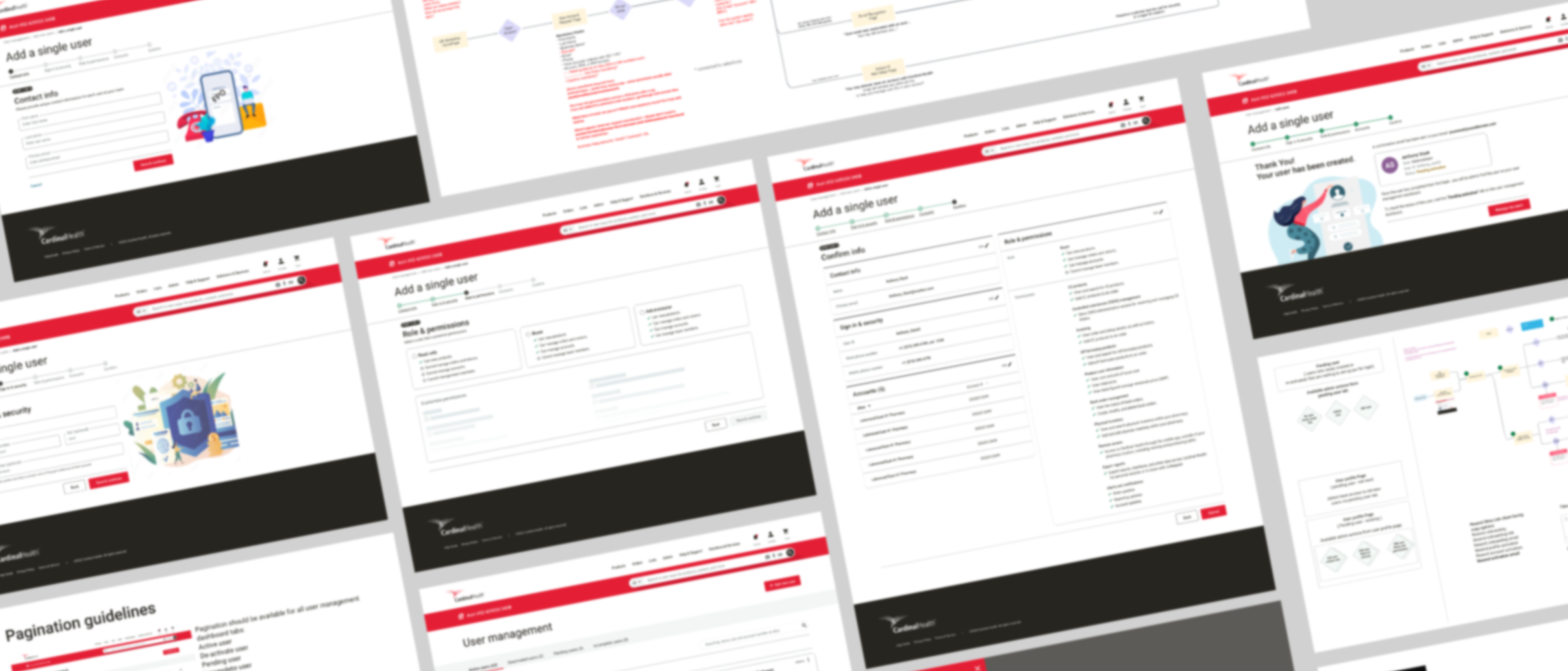
We are working through a series of self-service features to help our users manage their teams and accounts. My squad and I are currently working on several workstreams.
The first login feature release was Multi-Factor Authentication (MFA) integration using Okta's API.
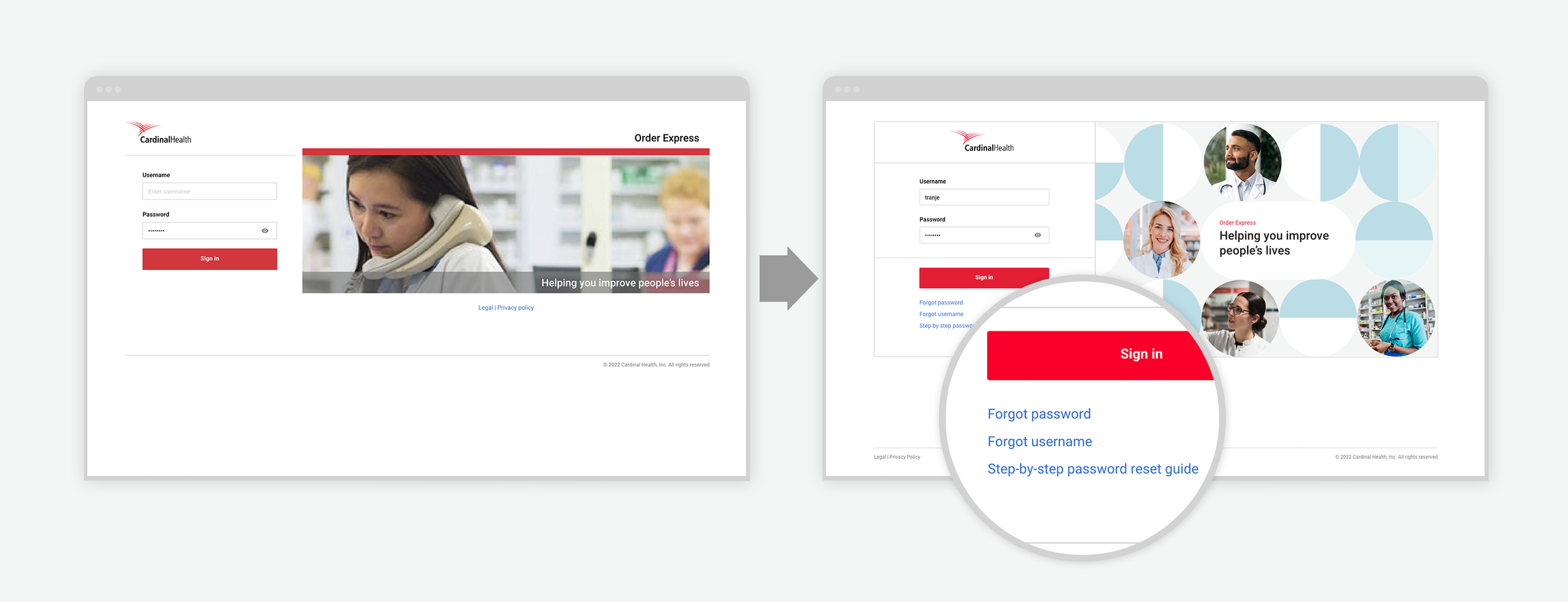
OKTA MFA INTEGRATION: DESIGN, DEVELOP, DEPLOY
For efficiency, we started the design process by using Okta's out-of-the-box API as a foundation for the user flow.
We then identified improvements or modifications necessary based on our user's behaviors and business needs.
Three key findings from the discovery phase influenced the flows and requirements:
BUSINESS NEED
Regulated products require higher security standards.
ACTION
Add additional screens to explain reasons for added security needs outside of the base Okta flow.
USER BEHAVIOR
Independent pharmacies often share one email account amongst several users.
ACTION
Allow more than one username per email account.
USER BEHAVIOR
Pharmacies often don't allow mobile phones on the floor.
ACTION
Ensure voice MFA is enabled and allow for extensions for office phone numbers.
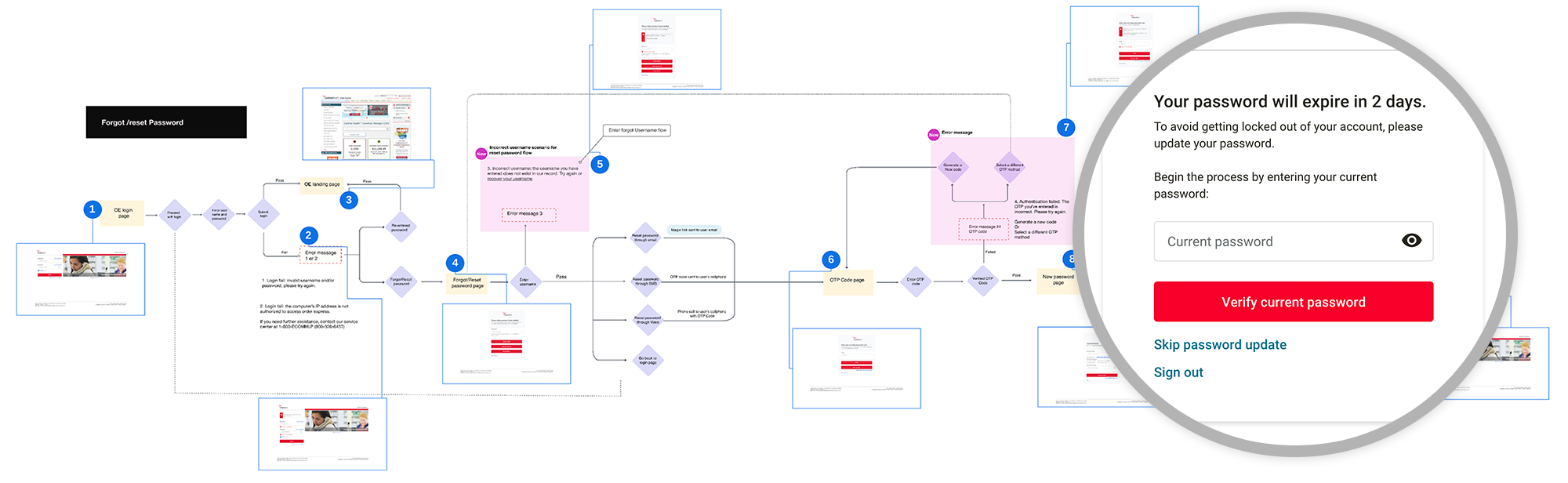
Higher security standards required modifications to Okta’s base flow.

TESTING & RESULTS
The first wave of release to a select number of users will act as a testing ground where we will collect data and user feedback to help inform further improvements.
LOOKING FORWARD
I am actively working on more net-new self-service features for login, user management, and account management. We are following the design thinking process with each feature – including discovery, prototype builds, garnering feedback from real users, and iterating from there.
Next Case Studies
RESEARCH • TESTING STRATEGY • WEB DESIGN
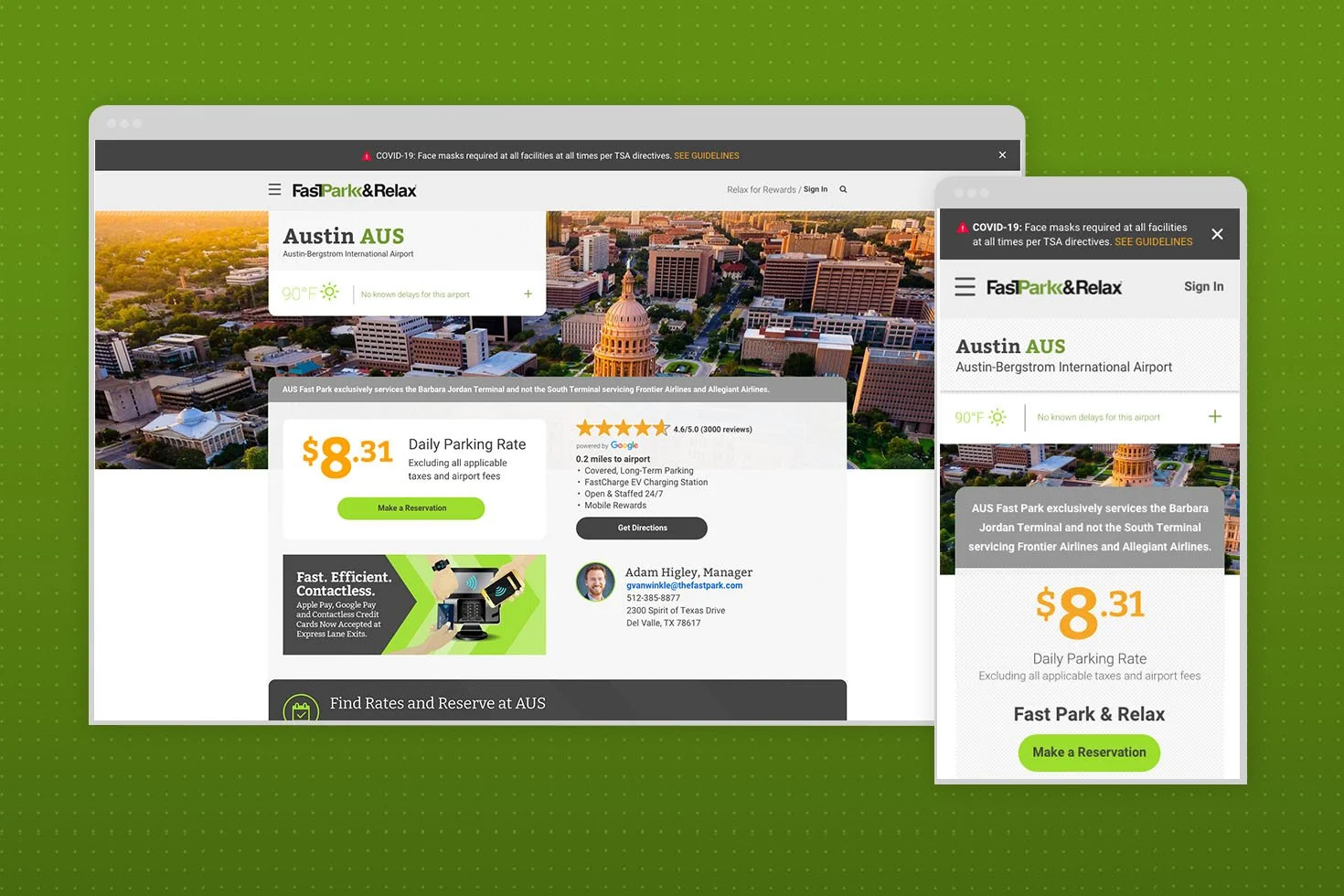
Small, continuous updates drive big results.
RESEARCH • WIREFRAMES • WEB DESIGN • PROTOTYPE
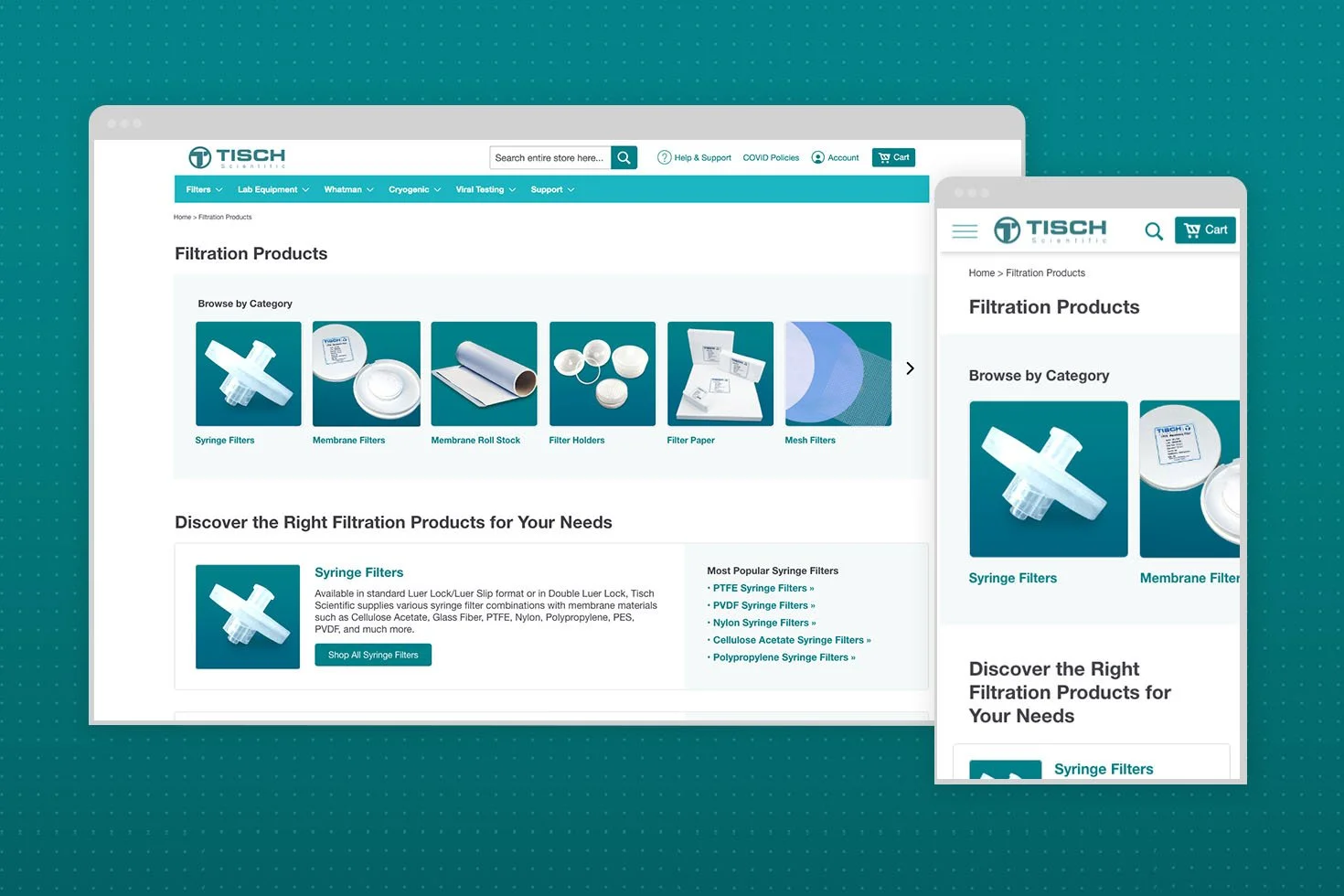
Simplifying the discovery and purchase of thousands of lab equipment products.
WORKSHOP • IDEATION • APP DESIGN • PROTOTYPE
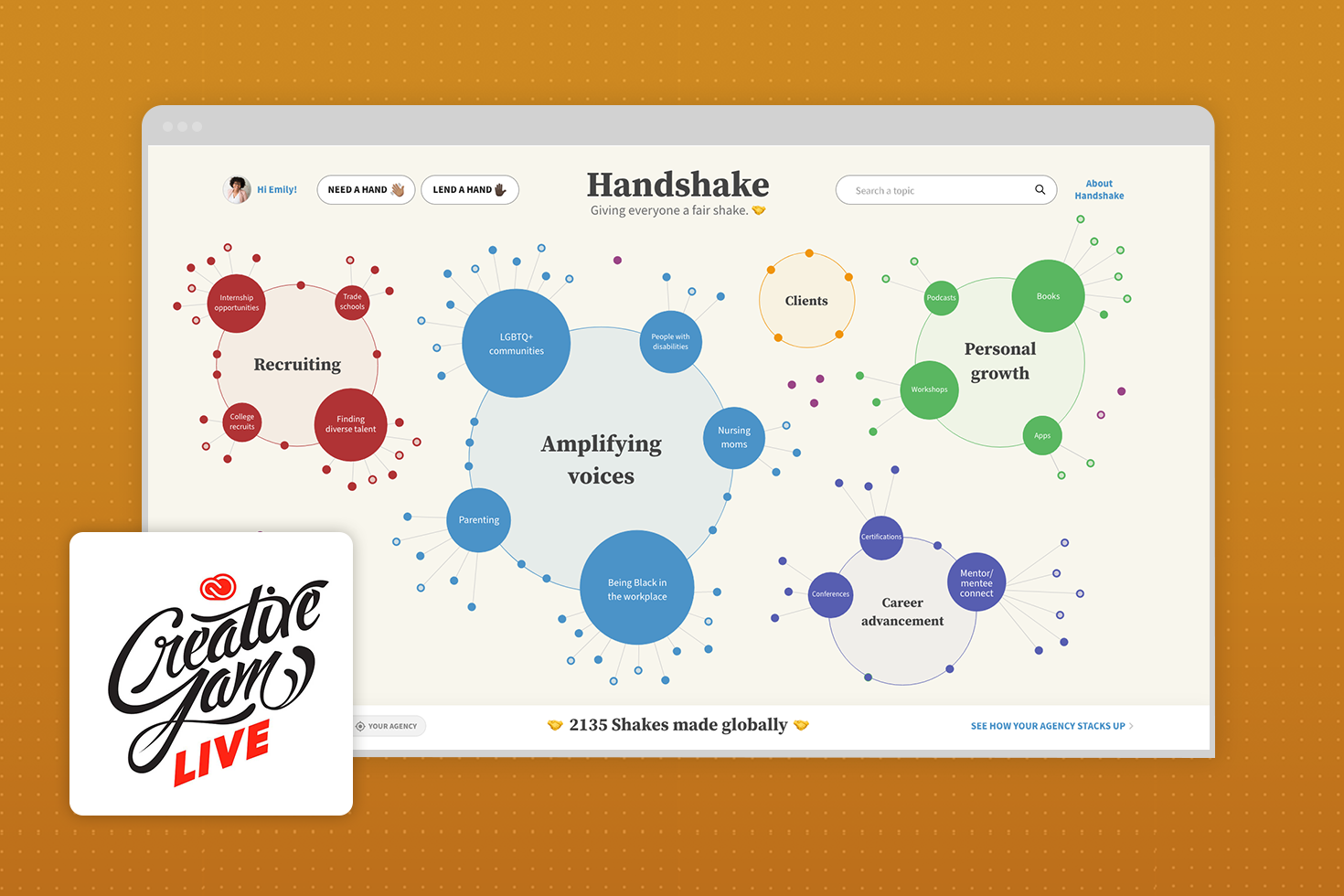
Visionary DE&I solution for an agency network.